

Fungal Acne vs. Regular Acne in Teens: How to Tell the Difference
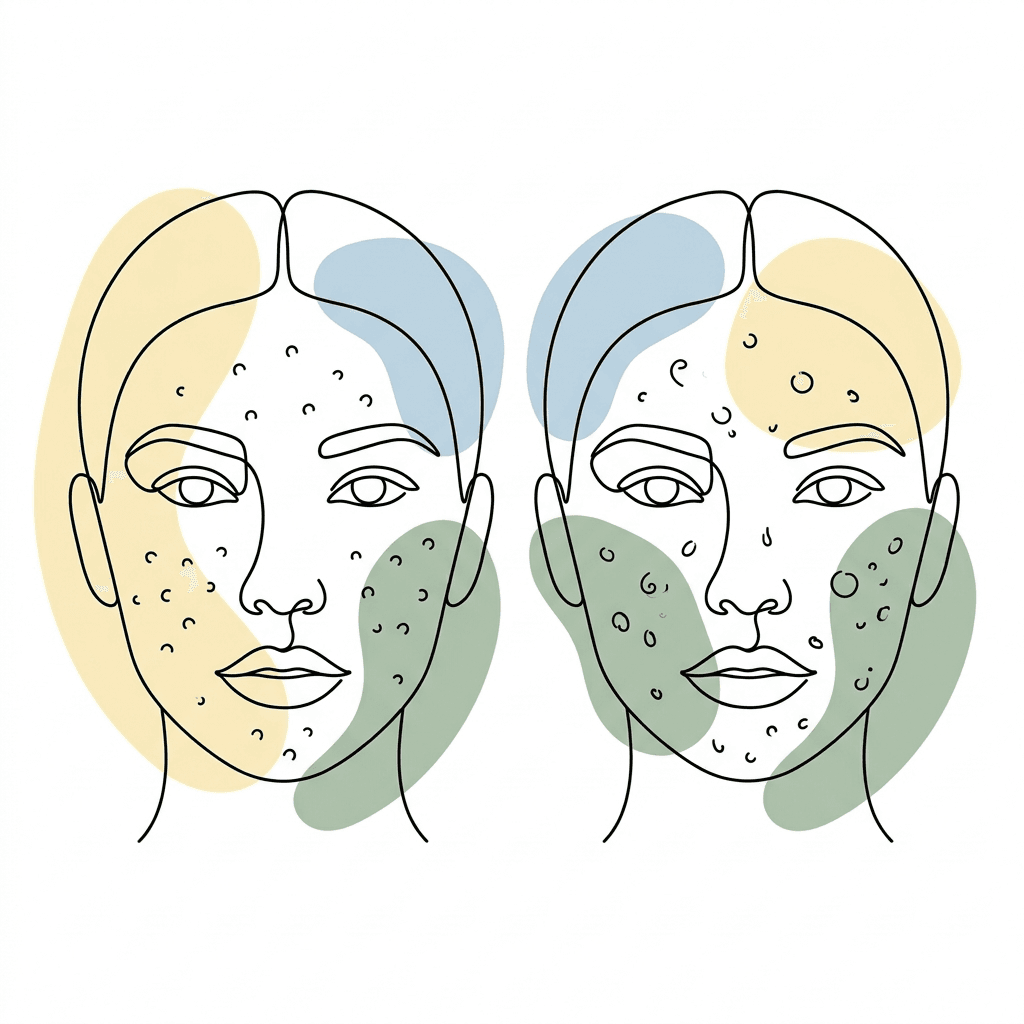
Your teen has been washing their face religiously, using every acne product you bought, and their skin is somehow getting worse. The tiny, uniform bumps keep spreading across their forehead. The expensive salicylic acid cleanser does nothing. The benzoyl peroxide makes it angrier.
Here’s the uncomfortable truth most skincare advice ignores: not all bumps on a teen’s face are acne. And treating the wrong condition doesn’t just fail — it actively makes things worse.
What Is Fungal Acne?
Despite the name, fungal acne isn’t acne at all. Its medical name is pityrosporum folliculitis (or Malassezia folliculitis), and it’s caused by an overgrowth of yeast — not bacteria.
Every human has Malassezia yeast living naturally on their skin. It’s harmless in normal amounts. But when conditions change — excessive sweating, humidity, antibiotics that wipe out competing bacteria, or a compromised skin barrier — this yeast multiplies rapidly inside hair follicles, triggering an immune response that produces bumps that look like acne but behave completely differently.
The Identification Guide: Fungal vs. Regular Acne
This is the single most important section for parents. Getting this distinction right saves weeks of frustration and wasted products.
| Feature | Fungal Acne | Regular Acne |
|---|---|---|
| Bump size | Uniform — all roughly 1-2mm | Varied — mix of tiny and large |
| Bump appearance | Flesh-colored or slightly red, dome-shaped | Whiteheads, blackheads, inflamed red bumps |
| Sensation | Itchy (key differentiator) | Painful or tender, rarely itchy |
| Location | Forehead, chest, upper back, shoulders | T-zone, cheeks, chin, jawline |
| Pattern | Dense clusters, almost like a rash | Scattered, random distribution |
| Blackheads present? | No — never | Yes — often |
| Response to antibiotics | Gets worse | Often improves |
| Response to antifungals | Clears rapidly | No effect |
The Itch Test
The most reliable at-home indicator: does it itch? Regular acne is painful, tender, or pressure-sensitive. Fungal acne is persistently, maddeningly itchy — especially after sweating or in humid conditions. If your teen is scratching their forehead bumps rather than gingerly avoiding them, suspect fungal acne.
The Uniformity Test
Look closely at the bumps. If they’re all essentially identical — same size, same shape, same color — that’s characteristic of fungal folliculitis. Bacterial acne creates a chaotic landscape of different-sized lesions.
Why Standard Acne Products Make Fungal Acne Worse
This is where most parents and teens fall into the trap. Malassezia yeast feeds on specific fatty acids and lipids. Many popular “acne-fighting” products contain precisely these ingredients:
Ingredients That Feed Fungal Acne:
- Coconut oil / Coconut derivatives — extremely common in “natural” teen skincare
- Fatty alcohols (cetyl alcohol, cetearyl alcohol) — found in most creamy moisturizers
- Polysorbates (polysorbate 20, 60, 80) — common emulsifiers
- Lauric acid — present in many oil-based cleansers
- Esters (isopropyl palmitate, isopropyl myristate) — texture-enhancing ingredients
- Fermented ingredients — galactomyces, saccharomyces (popular in K-beauty)
When a teen with undiagnosed fungal acne applies a rich moisturizer loaded with fatty alcohols and esters, they’re essentially feeding the yeast a full meal. The breakout worsens, so they apply more product, creating a devastating cycle.
The Antibiotic Trap
One of the most dangerous scenarios: a dermatologist diagnoses “acne” without considering fungal folliculitis and prescribes oral antibiotics. Antibiotics kill bacteria — including the beneficial bacteria on the skin that naturally compete with Malassezia yeast. With the competition eliminated, the yeast proliferates explosively, and the teen’s skin erupts dramatically while on medication that was supposed to help.
If your teen’s skin worsened significantly on antibiotics, this is a strong signal that fungal acne — not bacterial acne — is the primary issue.
What Actually Works: The Fungal Acne Treatment Plan
Step 1: The Antifungal Wash
The most effective first-line treatment is a zinc pyrithione or ketoconazole wash used as a short-contact treatment:
- Apply the wash to affected areas
- Leave it on for 5-10 minutes (this is critical — simply rinsing it off immediately doesn’t allow enough contact time)
- Rinse thoroughly
- Do this once daily for 2-3 weeks
Over-the-counter options include Vanicream Z-Bar (zinc pyrithione), Nizoral shampoo (ketoconazole 1%), and Noble Formula bar (zinc pyrithione 2%). Yes, some of these are marketed as shampoos — they work just as well on facial skin.
Step 2: Fungal Acne-Safe Moisturizer
Once you’ve started antifungal treatment, your teen still needs hydration — but the moisturizer must be free of yeast-feeding ingredients.
Fungal acne-safe moisturizers contain:
- Squalane oil (derived from olives, not yeast-feeding)
- Hyaluronic acid
- Glycerin
- Aloe vera
- Urea
The simplest option: Pure squalane oil. One ingredient, universally well-tolerated, and 100% fungal acne safe.
Step 3: Fungal Acne-Safe Sunscreen
Switch to a mineral-only sunscreen (zinc oxide and/or titanium dioxide as the only active ingredients). Most chemical sunscreens contain emulsifiers and esters that feed Malassezia.
Step 4: Stop All Active Acne Treatments
While treating fungal acne, pause:
- Benzoyl peroxide (doesn’t affect yeast)
- Salicylic acid face washes (won’t help, may irritate)
- Retinoids (these can actually help long-term but may irritate during the acute phase)
The goal is to starve the yeast, kill it with antifungals, and avoid re-feeding it with contaminated products.
The Timeline: What to Expect
- Days 1-3: Itching decreases noticeably
- Days 5-7: New bumps stop appearing; existing bumps begin to flatten
- Weeks 2-3: Significant visible clearing
- Week 4+: Most cases fully resolved
If no improvement is seen after 2-3 weeks of consistent antifungal treatment, see a dermatologist for a skin scraping to confirm the diagnosis and potentially prescribe oral antifungals (fluconazole or itraconazole).
Can Teens Have Both Fungal and Regular Acne?
Yes — and this is common. Many teenagers have a combination of bacterial acne and fungal folliculitis simultaneously, which is one reason treatment can be so frustrating. The bacterial acne responds to standard treatments while the fungal component stubbornly persists.
Signs of mixed presentation:
- Some bumps are large, inflamed, and painful (bacterial) while others are small, uniform, and itchy (fungal)
- Partial improvement with acne treatment — the big pimples resolve but the forehead texture never clears
- Different zones behave differently — cheeks improve while forehead worsens
In mixed cases, a dermatologist can design a dual-treatment protocol that addresses both conditions without the treatments interfering with each other.
Prevention: Keeping Fungal Acne From Returning
Once cleared, fungal acne has a high recurrence rate if the underlying triggers aren’t managed:
- Shower immediately after sweating — trapped sweat in humid conditions is trigger #1
- Change workout clothes promptly — don’t sit in damp fabrics
- Use a maintenance antifungal wash once weekly to keep yeast populations in check
- Audit all skincare products for yeast-feeding ingredients before adding anything new to the routine
- If prescribed antibiotics for any reason (not just skin), proactively use antifungal skincare during the course to prevent yeast overgrowth